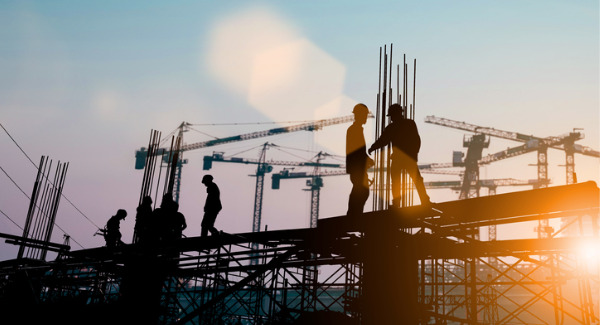
Modern Methods of Construction (MMC) offer a pathway to accelerate delivery, improve quality, and reduce environmental impact. By shifting large portions of construction into controlled factory environments, MMC enables components — from panelised wall systems and bathroom pods to full volumetric modules — to be manufactured off-site and assembled rapidly on-site. This approach enhances efficiency, safety, and quality assurance, but its potential extends far beyond streamlined processes. It represents a fundamental shift toward a more adaptable, resilient, and sustainable construction industry.
Reducing Environmental Impact Through Smarter Building
Australia’s built environment contributes around 39% of national greenhouse gas emissions when accounting for both operational and embodied carbon. Traditional construction relies heavily on concrete and steel, generates significant waste, and consumes large amounts of energy throughout a building’s lifecycle.
MMC provides an opportunity to reduce this footprint through better material use, energy-efficient design, and waste minimisation.
Cutting Construction Waste
Construction and demolition waste accounts for roughly 40% of Australia’s total waste output. On conventional building sites, overordering, offcuts, and inefficiencies are common — much of it ending up in landfill.
MMC shifts most processes into a factory setting, where materials are pre-cut, pre-measured, and optimised for installation. This controlled environment dramatically reduces waste and improves resource efficiency.
Lowering Carbon Emissions
Across Australia, innovative projects are demonstrating the scalability and environmental benefits of low-carbon MMC techniques.
In Brisbane, the Monterey at Kangaroo Point development used cross-laminated timber (CLT) supplied by XLam to construct a 10-storey residential building. CLT not only addressed the complexities of building over the CLEM7 tunnel but also replaced carbon-intensive concrete and steel with sustainable timber. The result: an estimated reduction of 3,744 tonnes of CO₂ — equivalent to removing 700 petrol cars from the road for a year.
Learn More: https://www.aurecongroup.com/projects/property/monterey-kangaroo-point
In regional New South Wales, Green Timber Technology (GTT) is advancing sustainable offsite construction from its base in Orange. Using a “kit‑of‑parts” methodology, GTT produces lightweight, timber-framed panels in a controlled factory environment. This approach enhances build quality, reduces waste, and accelerates delivery. Their investment in advanced timber processing equipment and focus on residential projects demonstrates how MMC can deliver scalable, environmentally responsible housing solutions. Learn More about GTT: https://greentimber.com.au/
Faster Delivery and Reduced On-Site Disruption
One of MMC’s most compelling advantages is speed. Traditional projects are vulnerable to weather delays, subcontractor shortages, and sequencing bottlenecks. MMC enables parallel workflows — site preparation and offsite fabrication occur simultaneously — reducing total project timelines by 30–50%.
A standout example is the Woree development in Cairns, Queensland’s largest social and affordable housing project. The initiative will deliver 490 homes, including social, affordable, and specialist disability accommodation. By employing modular construction, the project is accelerating delivery and minimising on-site disruption, with completion expected by the end of 2026. Factory-built modules ensure consistent quality while enabling rapid assembly once on site.
Learn More: https://www.naif.gov.au/media-centre/queensland-s-biggest-ever-social-and-affordable-housing-project/
Better Performance Across the Building Lifecycle
The benefits of MMC extend well beyond construction. Factory-built components often exceed minimum compliance standards, contributing to lower operational energy use over time. High levels of airtightness, optimised orientation, and integrated solar and battery systems can be incorporated from the design stage, resulting in buildings that perform better and cost less to operate.
A Changing Workforce: The Rise of the “Supertradie”
MMC is also reshaping the construction workforce. Factory-based environments offer safer, more flexible, and more accessible working conditions, opening the industry to a broader demographic — including people who may not be suited to traditional site-based roles.
At the same time, the rise of Design for Manufacturing and Assembly (DfMA) is creating hybrid skill sets that blend trade expertise with manufacturing and digital capabilities. This new class of “Supertradies” is equipped not only to perform traditional tasks but also to manufacture, assemble, and maintain prefabricated buildings. These roles are central to the future of industrialised construction.
Case Studies: MMC in Practice
Architect & Design Underwood – Wilsons Promontory, Victoria
Architect & Design Underwood views MMC as a powerful tool when applied in the right context. While prefabrication isn’t suitable for every project — particularly those requiring highly complex architectural forms — it can be transformative in remote or logistically constrained environments.
Their work with Parks Victoria at Wilson’s Promontory National Park illustrates this. Tasked with delivering short‑stay accommodation cabins near Tidal River, the team identified an opportunity to leverage MMC due to the site’s remoteness and the client’s brief. They partnered with engineering specialists Phelan Shilo, whose expertise in modular systems, including complex Formula One structures, is helping ensure safe lifting, transport, and assembly.
Learn More: https://www.parks.vic.gov.au/news/2023/09/22/04/41/acccommodation-boost-for-busy-wilsons-prom
Eclipse Passive House – New South Wales
Eclipse Passive House demonstrates how MMC aligns naturally with high-performance building standards. The company transitioned from traditional site-built methods to off-site construction to better meet passive house requirements. By manufacturing components in a controlled environment, Eclipse delivers airtight, thermally efficient homes with consistent build quality. This shift has reduced construction time, lowered environmental impact, and enabled the delivery of homes that meet strict heating and cooling performance standards — without compromising affordability or scalability.
Learn More: https://www.eclipsepassivehouse.com.au/
A Necessary Shift for Australia’s Future
As Australia confronts its most ambitious housing target in decades, the industry must embrace new ways of building. Prefabrication and modular construction are not fringe alternatives — they are proven, scalable solutions already delivering faster, cleaner, and higher‑quality outcomes across the country.
With the right policy settings, investment, and workforce development, MMC can play a central role in creating a more resilient, sustainable, and productive construction sector. The opportunity is clear: industrialised construction is not just an efficiency upgrade — it is essential to meeting Australia’s housing, environmental, and economic goals.
Testimonials
Thank you for all your efforts on our projects; they have been an invaluable contribution to their success. We look forward to working with you on future projects.
Ian Ferguson MPM Group
Jess and Karl at Draftech were amazing. The communication from the start was prompt, and the entire process was extremely easy. We needed their knowledge on Air Schematics, and they had made one up for our buildings that we service. Thanks so much, and we will be using you guys in the future. Cheers, Air Control Australia.
Greg Colebrook AirControl Australia
With Draftech’s thorough understanding of building services modelling and close attention to detail, Forth has been afforded the opportunity to outsource some of our BIM projects with absolute confidence in the accuracy of the final product.
Gary Murdoch Forth Consulting
Very professional and efficient organization. Delivered a great product to a tight deadline.
ACE Power
Karl and the team are very professional and have a vast knowledge of BIM coordination.
Dwayne Willaims Babinda Electrics
We had multiple large projects with tight deadlines and needed a company we could trust. The teams delivery, attention to detail and understanding of what is being designed is always executed to a high standard.
Martin O’Donovan Envar Engineers
Draftech offered a flexible and reliable approach to working collaboratively with our team. They met our expectations and quality requirements and also offered up new ideas.
Draftech have proven to be a valuable and trustworthy resource and we will continue to work with Draftech on other projects.
Simon Marsden Umow Lai
Draftech is different from others in the professionalism and features they provide.
The ability to walk through projects in real time online provides invaluable insight into problem areas and helps provide an efficient resolution on the spot without many phone calls, emails and the necessity for us to paw through countless drawings to understand the issues.
Todd Morris Manager - Air mech
Draftech were put forward to FIP Electrical as the solution to Coordinate, Model, carry out clash detection, provide Electrical Services Shop Drawings, as built documentation and completed electrical model.
Simon Thorpe FIP Electrical
In close collaboration Draftech set up all our systems and model deliverables. In this process Draftech have proven to be a valuable resource for us and demonstrated commitment, understanding and professionalism.
David Skelley DJCoalition
Draftech’s attention to detail and proactive nature throughout the project assisted us in identifying issues before becoming evident on site, saving us both time and unexpected costs.
Matt Payne PJM Engineering Services
They delivered very high quality Revit models and associated 2D documentation at key milestones, working to a tight budget and in strict accordance with the Architects’ BIM requirements.
Peter Thomas Geoff Hesford
We found Draftech’s work to be of high standard and the team delivered exactly as agreed, in fact, when we considered the project complete, Draftech put further resources into the project as they were not satisfied.
John Johnson Beca
Engaging Draftech during design gave us the tools to make smart decisions.
Hansen Yuncken Design Manager - Michael Harkins
The drafting service is timely, reliable and fit for purpose for the built environment.
Peter Harvey Harvey Industries
Draftech stands apart from other drafting services that we have previously used in their attention to detail and ability to adapt to the individual client’s requirements.
Doug Holt McCaig Aircon
I can confidently recommend Draftech as a solid and reliable supplier, and experts in their field. I look forward to working with them again in the near future.
Chris Behan Norman Disney & Young
After seeing the benefits Draftech provided us on the Townsville Hospital Redevelopment we have set up a relationship with Draftech and intend to continue to use their BIM knowledge and skills for our future projects.
Brad Lund Energy Power Systems
Draftech has no competition as they are in a class of their own.
John Boyes Babinda Electrics
Draftech Developments Drafting and Design Capabilities, in conjunction with their outstanding level of Client service and support has provided great solutions to our engineering and Drafting Design portions within our Gorgon Barrow Island Project.
Aaron Hazelton Applied Electro Systems Pty Ltd
Draftech set up necessary systems and workflows very quickly, but also setup auditable estimating and weekly cost tracking processes that we utilised, requiring little maintenance.
TOM PURDON MPM GROUP