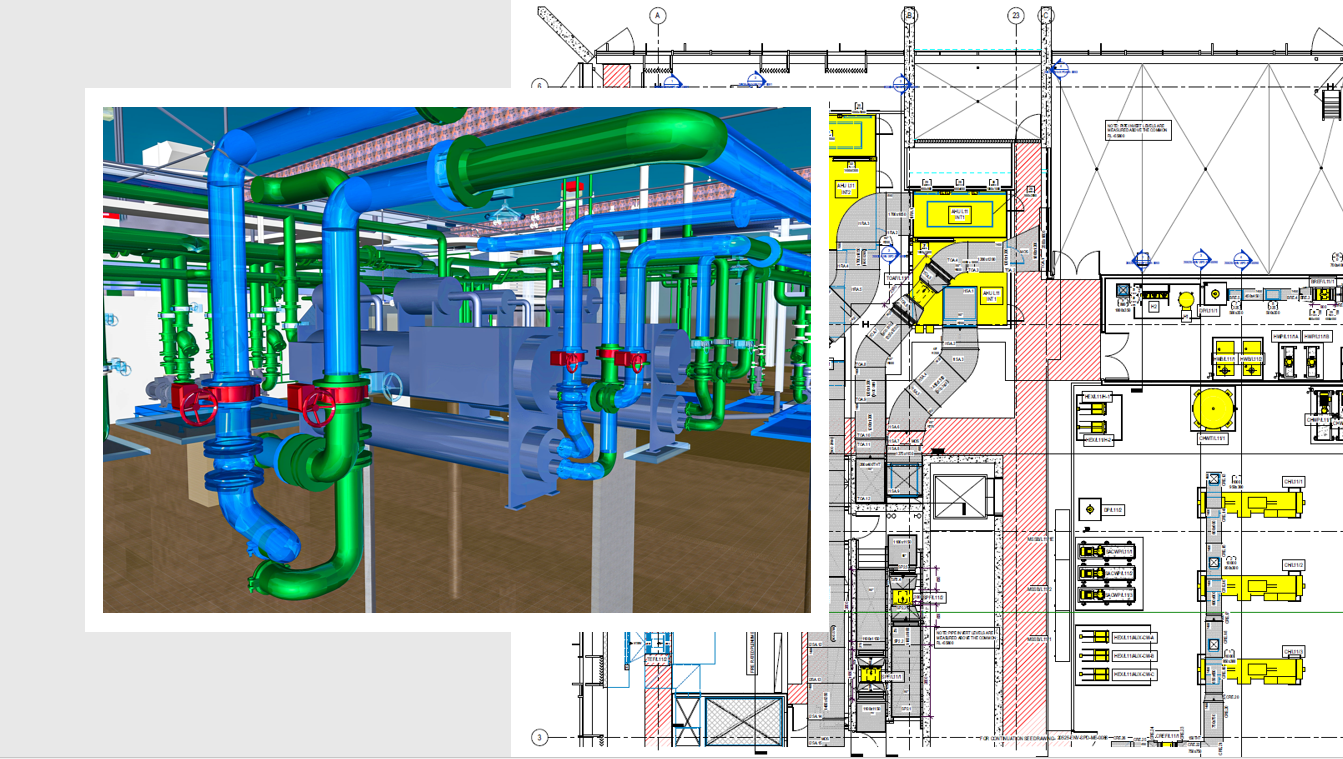
For years, the industry conversation has circled around a false choice: Will BIM replace shop drawings? The short answer is no — and the long answer is far more interesting.
BIM has changed almost everything about how we design, coordinate, and deliver buildings. But even with the most advanced models, shop drawings remain the contractual, fabrication‑ready, installation‑accountable documents that projects depend on. What has changed is how those drawings are created, validated, and connected to the wider construction workflow.
The future isn’t “BIM vs shop drawings.” It’s a smarter, more integrated process where BIM elevates shop drawings into something far more accurate, coordinated, and reliable than traditional drafting ever could.
Shop Drawings Still Deliver What BIM Alone Cannot: Fabrication Certainty
A BIM model is a powerful coordination environment — but it is not, on its own, a fabrication deliverable.
Contractors, fabricators, and installers still rely on shop drawings for:
- Formal approval and sign‑off
- Clear installation instructions
- Fabrication‑ready dimensions
- Accountability and traceability
- Compliance with project standards and contracts
These drawings remain the legal and practical documents that define what will actually be built. They are the reference point when something goes wrong, the guide when something needs to be installed, and the evidence when variations arise.
Even the most detailed BIM model doesn’t replace that need. Instead, it strengthens it.
BIM Elevates Shop Drawings Through Data, Coordination, and LOD
Where BIM truly shines is in transforming the quality of shop drawings.
Model‑based workflows allow teams to:
- Detect clashes before drawings are produced
- Generate consistent, coordinated views
- Maintain alignment across disciplines
- Reduce manual drafting errors
- Produce drawings that reflect real‑world constructability
The model becomes the single source of truth — and the shop drawings become the precise, validated output of that truth.
This is the shift the industry is experiencing: BIM doesn’t eliminate shop drawings. It makes them better. Better coordinated. Better informed. Better aligned with the actual building process.
The Real Shift: From Manual Drafting to Model‑Derived Deliverables
The biggest transformation isn’t the existence of shop drawings — it’s the method behind them.
Traditionally, shop drawings were manually drafted, often re‑interpreting design intent and introducing inconsistencies. Today, leading contractors and fabricators are moving toward model‑led shop drawings, where:
- Views are extracted directly from the BIM model
- Updates flow automatically when the model changes
- Standards and templates ensure consistency
- Coordination happens before documentation
- Fabrication data is embedded, not re‑created
But this shift doesn’t happen automatically. It requires:
- Clear BIM execution plans
- Defined LOD requirements
- Disciplined modelling practices
- Strong QA processes
- Teams who understand both modelling and construction
Technology alone doesn’t deliver accuracy — process does.
The Future: BIM‑Powered Shop Drawing Delivery
In Australia, the conversation is maturing. The question is no longer whether BIM will replace shop drawings. It won’t. Instead, the industry is recognising that the most efficient, lowest‑risk projects are those where BIM and shop drawings work together in a connected workflow.
A future‑ready workflow looks like this:
- BIM provides a coordinated, data‑rich environment
- Shop drawings provide the contractual, build‑ready output
- Both are aligned, traceable, and continuously updated
- Fabricators and installers receive information they can trust
- Project teams reduce rework, RFIs, and delays
This is where the real value lies — not in choosing one over the other, but in integrating both.
BIM hasn’t replaced shop drawings, and it won’t. What it has done is transform them into smarter, faster, more reliable deliverables that reduce risk and improve buildability.
Draftech – Your Project, Our Expertise
Testimonials
Just taking a moment to thank you for your efforts on the ECI. What we produced in a short period was fantastic
Martin O’Donovan Envar Engineers
Fantastic team to work with. Thank you to everyone at Draftech for your support on this fast-paced Tier 1 project. The collaboration with Precision BIM was a great success, and we look forward to working together again soon.
Dion Barker Precision BIM
Draftech stands out through their collaborative approach from the outset, excellent value for the services they provide, and strong understanding of client BIM project information requirements. They consistently align with project expectations and deliver practical, high-quality outcomes that support successful project delivery.
Brendan Meikle ADCO
Thanks very much for your support with the As-Built Models. It’s been really refreshing to work with someone as self-sufficient and diligent as you.
Brenton Sonego ADCO
Expedient and efficient drafting with professional-level service.
Philip Finch Envar Engineers
Thank you for all your efforts on our projects; they have been an invaluable contribution to their success. We look forward to working with you on future projects.
Ian Ferguson MPM Group
Jess and Karl at Draftech were amazing. The communication from the start was prompt, and the entire process was extremely easy. We needed their knowledge on Air Schematics, and they had made one up for our buildings that we service. Thanks so much, and we will be using you guys in the future. Cheers, Air Control Australia.
Greg Colebrook AirControl Australia
With Draftech’s thorough understanding of building services modelling and close attention to detail, Forth has been afforded the opportunity to outsource some of our BIM projects with absolute confidence in the accuracy of the final product.
Gary Murdoch Forth Consulting
Very professional and efficient organization. Delivered a great product to a tight deadline.
ACE Power
Karl and the team are very professional and have a vast knowledge of BIM coordination.
Dwayne Willaims Babinda Electrics
We had multiple large projects with tight deadlines and needed a company we could trust. The teams delivery, attention to detail and understanding of what is being designed is always executed to a high standard.
Martin O’Donovan Envar Engineers
Draftech offered a flexible and reliable approach to working collaboratively with our team. They met our expectations and quality requirements and also offered up new ideas.
Draftech have proven to be a valuable and trustworthy resource and we will continue to work with Draftech on other projects.
Simon Marsden Umow Lai
Draftech is different from others in the professionalism and features they provide.
The ability to walk through projects in real time online provides invaluable insight into problem areas and helps provide an efficient resolution on the spot without many phone calls, emails and the necessity for us to paw through countless drawings to understand the issues.
Todd Morris Manager - Air mech
Draftech were put forward to FIP Electrical as the solution to Coordinate, Model, carry out clash detection, provide Electrical Services Shop Drawings, as built documentation and completed electrical model.
Simon Thorpe FIP Electrical
In close collaboration Draftech set up all our systems and model deliverables. In this process Draftech have proven to be a valuable resource for us and demonstrated commitment, understanding and professionalism.
David Skelley DJCoalition
Draftech’s attention to detail and proactive nature throughout the project assisted us in identifying issues before becoming evident on site, saving us both time and unexpected costs.
Matt Payne PJM Engineering Services
They delivered very high quality Revit models and associated 2D documentation at key milestones, working to a tight budget and in strict accordance with the Architects’ BIM requirements.
Peter Thomas Geoff Hesford
We found Draftech’s work to be of high standard and the team delivered exactly as agreed, in fact, when we considered the project complete, Draftech put further resources into the project as they were not satisfied.
John Johnson Beca
Engaging Draftech during design gave us the tools to make smart decisions.
Hansen Yuncken Design Manager - Michael Harkins
The drafting service is timely, reliable and fit for purpose for the built environment.
Peter Harvey Harvey Industries
Draftech stands apart from other drafting services that we have previously used in their attention to detail and ability to adapt to the individual client’s requirements.
Doug Holt McCaig Aircon
I can confidently recommend Draftech as a solid and reliable supplier, and experts in their field. I look forward to working with them again in the near future.
Chris Behan Norman Disney & Young
After seeing the benefits Draftech provided us on the Townsville Hospital Redevelopment we have set up a relationship with Draftech and intend to continue to use their BIM knowledge and skills for our future projects.
Brad Lund Energy Power Systems
Draftech has no competition as they are in a class of their own.
John Boyes Babinda Electrics
Draftech Developments Drafting and Design Capabilities, in conjunction with their outstanding level of Client service and support has provided great solutions to our engineering and Drafting Design portions within our Gorgon Barrow Island Project.
Aaron Hazelton Applied Electro Systems Pty Ltd
Draftech set up necessary systems and workflows very quickly, but also setup auditable estimating and weekly cost tracking processes that we utilised, requiring little maintenance.
TOM PURDON MPM GROUP