Short answer: yes — but they’ve moved from novelty to practical, uneven adoption. Digital twins, progressive assurance (a structured, staged approach to quality and handover) and AI are all major conversation topics in AEC today — increasingly driven by real projects, vendor products and new contracting approaches — yet uptake varies by sector, project size and organizational maturity. Below, we explain where each stands in 2024–25, what’s actually happening on projects, and the practical barriers firms still face.
Digital Twins: From Concept to Critical Infrastructure
Digital twins are no longer just marketing copy; governments and large owners are harnessing them to improve decision-making, operations and whole-life value. Recent industry analysis highlights their ability to accelerate and improve complex infrastructure and facility decisions, and to deliver measurable ROI when tied directly to operational needs (asset management, maintenance, energy, or transport optimisation). McKinsey & Company+1
What’s happening now:
- Owners of large or critical assets (transit, data centres, hospitals, campuses) are commissioning digital twins that connect BIM, IoT sensors, and operational data — aimed at predictive maintenance, energy optimisation and scenario simulation. Digital Construction Hub
- Software vendors (Autodesk Tandem, Bentley iTwin, Azure Digital Twins and others) are shipping more dashboarding, data-validation and ops-focused features to make twins useful beyond handover.
- Case studies and academic reviews show digital twins work best when built for clear use cases (not “build everything” experiments). Technical success is usually tied to governance, data quality and stakeholder alignment. ScienceDirect+1
Bottom line: digital twins are hot where owners can justify operational savings or risk reduction, and they’re maturing from R&D projects to business cases — but broad, small-project adoption remains limited.
Progressive Assurance: Proactive Risk Management, Gaining Traction as Part of Delivery
“Progressive assurance” — the idea of staged, ongoing assurance checkpoints across design and delivery to reduce nonconformance and rework — is being adopted in quality management and increasingly referenced alongside progressive design-build delivery approaches. Industry guidance and project teams are formalising assurance points to improve handover readiness and reduce surprises at practical completion. Shirley Parsons+1
What’s happening now:
- Contracting bodies and insurers are publishing documents and guidance that support progressive (staged) design–build and clearer assurance milestones so owners and contractors share risk and visibility earlier. aiacontracts.com+1
- On projects using digital workflows, progressive assurance is often implemented via dashboards, data completeness checks and automated QA rules that gate progress to the next stages. That makes assurance practical rather than purely audit-based.
Bottom line: progressive assurance is not a flashy technology but a pragmatic shift in delivery mindset — it complements digital twins and BIM by turning data checks into contractual checkpoints.
AI: The Engine Behind Smarter Workflows, Cautious Rollout
AI is everywhere in AEC conversations — from design automation, clash detection and quantity take-offs to safety monitoring and predictive maintenance — but adoption is mixed. Recent industry surveys show many firms experimenting with or running pilots; a significant share report little to no implementation yet, reflecting uncertainty around integration, skills and clear ROI. RICS+1
What’s happening now:
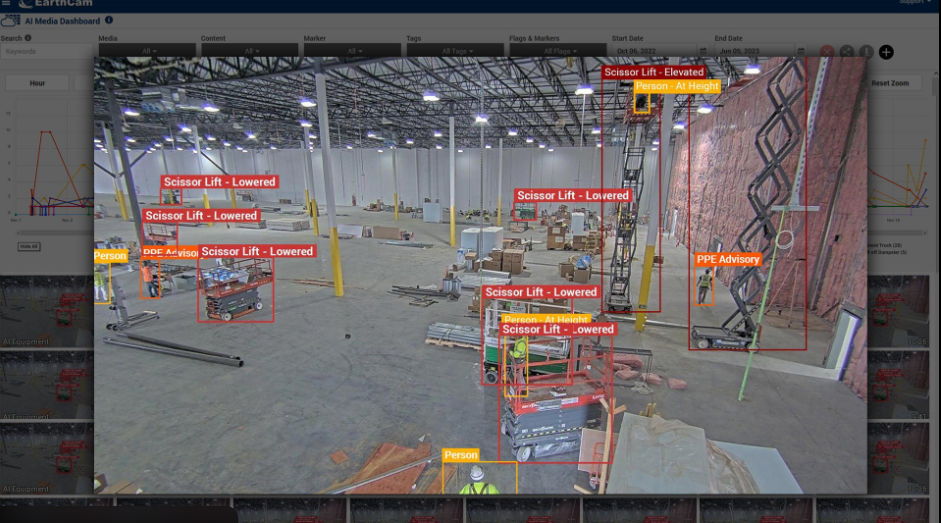
- Practical AI use cases on-site: video analytics for PPE and hazard detection, automated progress monitoring from cameras and photogrammetry, and NLP to extract data from specs and RFIs. Vendors are productizing these into usable features (safety cameras, automated reporting).
- Design-side AI (generative design, code compliance checking, cost estimation) is being trialled by larger firms and software vendors; many smaller firms still rely on human expertise supported by point tools. BuiltWorlds
- Challenges: data silos, lack of common standards, limited in-house AI skills, legal/regulatory concerns about automated decisions and liability, plus demand for explainability and auditing of AI outputs. RICS
Bottom line: AI is hot in headlines and pilot decks; its real, scaled impact depends on firms solving integration, governance and workforce-readiness problems.
Cross-cutting Realities and Challenges
- Data & interoperability depend on clean, connected data. Twins, assurance gates and AI all fail or underdeliver with poor data governance. Taylor & Francis Online
- Value-led use cases — the most successful implementations tie tech to a clear owner problem (lower OPEX, avoid rework, prevent downtime). McKinsey-level ROI arguments are influencing public-sector pilots. McKinsey & Company
- People & contracts — new contracting forms (progressive design-build, staged handover) and new roles (data managers, digital delivery leads) are emerging to make tech work in practice. aiacontracts.com
- Uneven adoption — large owners, infrastructure and specialist sectors lead; small builders and many SME consultants lag.
Practical Advice for Firms and Project Teams
- Start with a single, measurable use case (e.g., reduce O&M cost on HVAC via a twin; reduce site incidents using AI cameras). Build instrumentation and data pipes for that use case first. McKinsey & Company
- Bake progressive assurance into contractual milestones: define data completeness gates, QA rules and handover outputs up front. Shirley Parsons+1
- Focus on data quality, responsibilities and a simple integration layer (APIs, common formats) before buying “advanced” AI. Taylor & Francis Online
- Invest in a small multidisciplinary team (project manager + data engineer + domain SME) to run pilots, measure outcomes and scale what works.
Innovation is moving fast. The question isn’t whether these technologies are still relevant — it’s whether you’re ready to harness them. At Draftech, we believe your project deserves more than just support. It deserves a partner who understands the landscape and can guide you through it.
Draftech — Your Project, Our Expertise.
Testimonials
Just taking a moment to thank you for your efforts on the ECI. What we produced in a short period was fantastic
Martin O’Donovan Envar Engineers
Fantastic team to work with. Thank you to everyone at Draftech for your support on this fast-paced Tier 1 project. The collaboration with Precision BIM was a great success, and we look forward to working together again soon.
Dion Barker Precision BIM
Draftech stands out through their collaborative approach from the outset, excellent value for the services they provide, and strong understanding of client BIM project information requirements. They consistently align with project expectations and deliver practical, high-quality outcomes that support successful project delivery.
Brendan Meikle ADCO
Thanks very much for your support with the As-Built Models. It’s been really refreshing to work with someone as self-sufficient and diligent as you.
Brenton Sonego ADCO
Expedient and efficient drafting with professional-level service.
Philip Finch Envar Engineers
Thank you for all your efforts on our projects; they have been an invaluable contribution to their success. We look forward to working with you on future projects.
Ian Ferguson MPM Group
Jess and Karl at Draftech were amazing. The communication from the start was prompt, and the entire process was extremely easy. We needed their knowledge on Air Schematics, and they had made one up for our buildings that we service. Thanks so much, and we will be using you guys in the future. Cheers, Air Control Australia.
Greg Colebrook AirControl Australia
With Draftech’s thorough understanding of building services modelling and close attention to detail, Forth has been afforded the opportunity to outsource some of our BIM projects with absolute confidence in the accuracy of the final product.
Gary Murdoch Forth Consulting
Very professional and efficient organization. Delivered a great product to a tight deadline.
ACE Power
Karl and the team are very professional and have a vast knowledge of BIM coordination.
Dwayne Willaims Babinda Electrics
We had multiple large projects with tight deadlines and needed a company we could trust. The teams delivery, attention to detail and understanding of what is being designed is always executed to a high standard.
Martin O’Donovan Envar Engineers
Draftech offered a flexible and reliable approach to working collaboratively with our team. They met our expectations and quality requirements and also offered up new ideas.
Draftech have proven to be a valuable and trustworthy resource and we will continue to work with Draftech on other projects.
Simon Marsden Umow Lai
Draftech is different from others in the professionalism and features they provide.
The ability to walk through projects in real time online provides invaluable insight into problem areas and helps provide an efficient resolution on the spot without many phone calls, emails and the necessity for us to paw through countless drawings to understand the issues.
Todd Morris Manager - Air mech
Draftech were put forward to FIP Electrical as the solution to Coordinate, Model, carry out clash detection, provide Electrical Services Shop Drawings, as built documentation and completed electrical model.
Simon Thorpe FIP Electrical
In close collaboration Draftech set up all our systems and model deliverables. In this process Draftech have proven to be a valuable resource for us and demonstrated commitment, understanding and professionalism.
David Skelley DJCoalition
Draftech’s attention to detail and proactive nature throughout the project assisted us in identifying issues before becoming evident on site, saving us both time and unexpected costs.
Matt Payne PJM Engineering Services
They delivered very high quality Revit models and associated 2D documentation at key milestones, working to a tight budget and in strict accordance with the Architects’ BIM requirements.
Peter Thomas Geoff Hesford
We found Draftech’s work to be of high standard and the team delivered exactly as agreed, in fact, when we considered the project complete, Draftech put further resources into the project as they were not satisfied.
John Johnson Beca
Engaging Draftech during design gave us the tools to make smart decisions.
Hansen Yuncken Design Manager - Michael Harkins
The drafting service is timely, reliable and fit for purpose for the built environment.
Peter Harvey Harvey Industries
Draftech stands apart from other drafting services that we have previously used in their attention to detail and ability to adapt to the individual client’s requirements.
Doug Holt McCaig Aircon
I can confidently recommend Draftech as a solid and reliable supplier, and experts in their field. I look forward to working with them again in the near future.
Chris Behan Norman Disney & Young
After seeing the benefits Draftech provided us on the Townsville Hospital Redevelopment we have set up a relationship with Draftech and intend to continue to use their BIM knowledge and skills for our future projects.
Brad Lund Energy Power Systems
Draftech has no competition as they are in a class of their own.
John Boyes Babinda Electrics
Draftech Developments Drafting and Design Capabilities, in conjunction with their outstanding level of Client service and support has provided great solutions to our engineering and Drafting Design portions within our Gorgon Barrow Island Project.
Aaron Hazelton Applied Electro Systems Pty Ltd
Draftech set up necessary systems and workflows very quickly, but also setup auditable estimating and weekly cost tracking processes that we utilised, requiring little maintenance.
TOM PURDON MPM GROUP